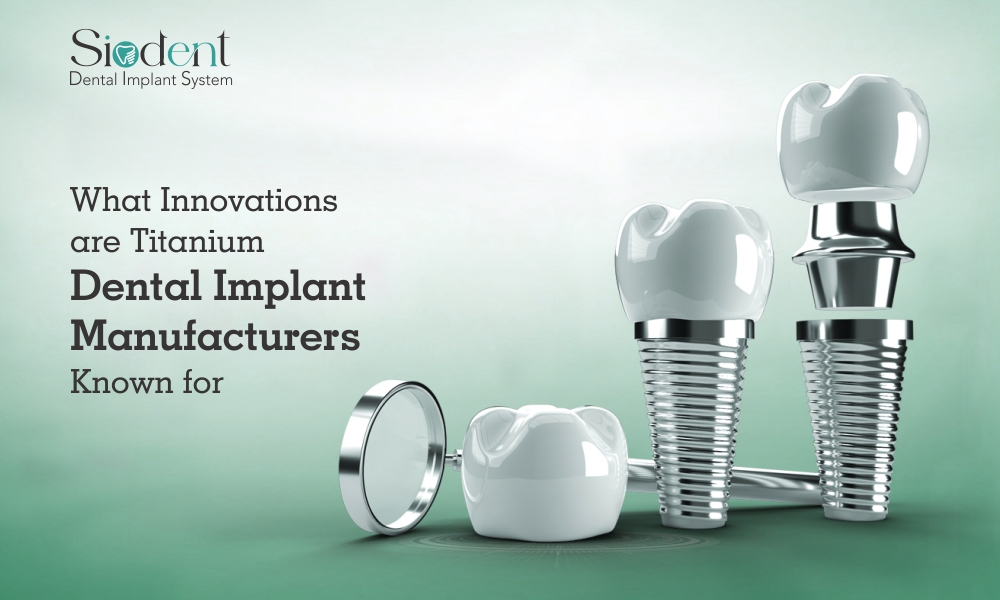
Since the discovery of titanium in the 1950s, the dental industry has benefited greatly. Because it is biocompatible, strong, and lightweight, titanium remains the preferred material for dental implants. However, titanium dental implant manufacturers continue to look for improved technology based on material science, design modifications, surgical technology, and revised architecture of the new models.
Enhanced Osseointegration through Surface Modifications
Osseointegration is the foundational step, the process by which the dental implant gets embedded in the jaw bone. To improve osseointegration rates and reduce healing times, manufacturers are researching different methods of changing the surface of implants.
- Sandblasted, Large-grit, Acid-etched (SLA) Surfaces: The smooth implant surface is abraded in this traditional method, leading to the practical fixing of bone cells and continuous growth.
- Microgranular and Microtextured Surfaces: These newer techniques provide a more complex surface profile, which may lead to enhanced osseointegration when compared to surfaces having simple roughness, as in the SLA process.
- Nanostructured Surfaces: Some implants contain nanotechnology that enhances the surface roughness and includes features on the submicron level, which improves the contact between the implant and the bone.
Material Innovations for Better Performance
- Titanium-Zirconium Alloys: The particularity of these alloys is a potential advantage in wear resistance and corrosion compared to titanium.
- Antimicrobial Coatings: These implants contain a surface layer that provides antimicrobial characteristics to minimize implant infection risk.
- 3D-Printed Implants: Titanium implants can be custom-designed using 3D printing technology to improve their integration with bone and positioning.
Implant Design Advancements for Enhanced Functionality and Aesthetics
Modern implant designs go beyond just functionality, with a focus on achieving a natural look and feel.
- Tapered Implants: The structure of these implants resembles the root shape and may provide enhanced stability and reduced rates of bone loss.
- Platform Switching: This design feature makes it possible to have a wide range of implant connectors between the implant and crown within one implant body, therefore offering flexibility in crown restoration.
- Immediate Load Implants: Under certain circumstances, these implants have the potential to maintain a dental crown or a prosthesis from the moment they are placed, thereby decreasing the time of treatment and enhancing the patient’s satisfaction.
The advancement in digital technologies has brought about integration into the field of dental implantology. CAD/CAM tools help design and produce individual parts of the implant and guides for surgery.
Essential Information and Future of Titanium Dental Implants
It is expected that the future of titanium dental implants will exhibit enhancements in material science, design, and surgical procedures. Researchers are investigating other compatible materials for biomedical applications, and the incorporation of biosensors into implants for the assessment of bone condition and osteo-connective tissue bonding is one area of consideration for the future.
In conclusion, titanium dental implant manufacturers are ensuring that they come up with better implant models, better health outcomes, treatment indicators, and overall improvements for the general patient. The future is already in sight, with an emphasis on material science, design functionality, and the effective use of digital technologies to make dental implants even more predictable, efficient, and patient-centered.
 Dental Implant Manufacturers